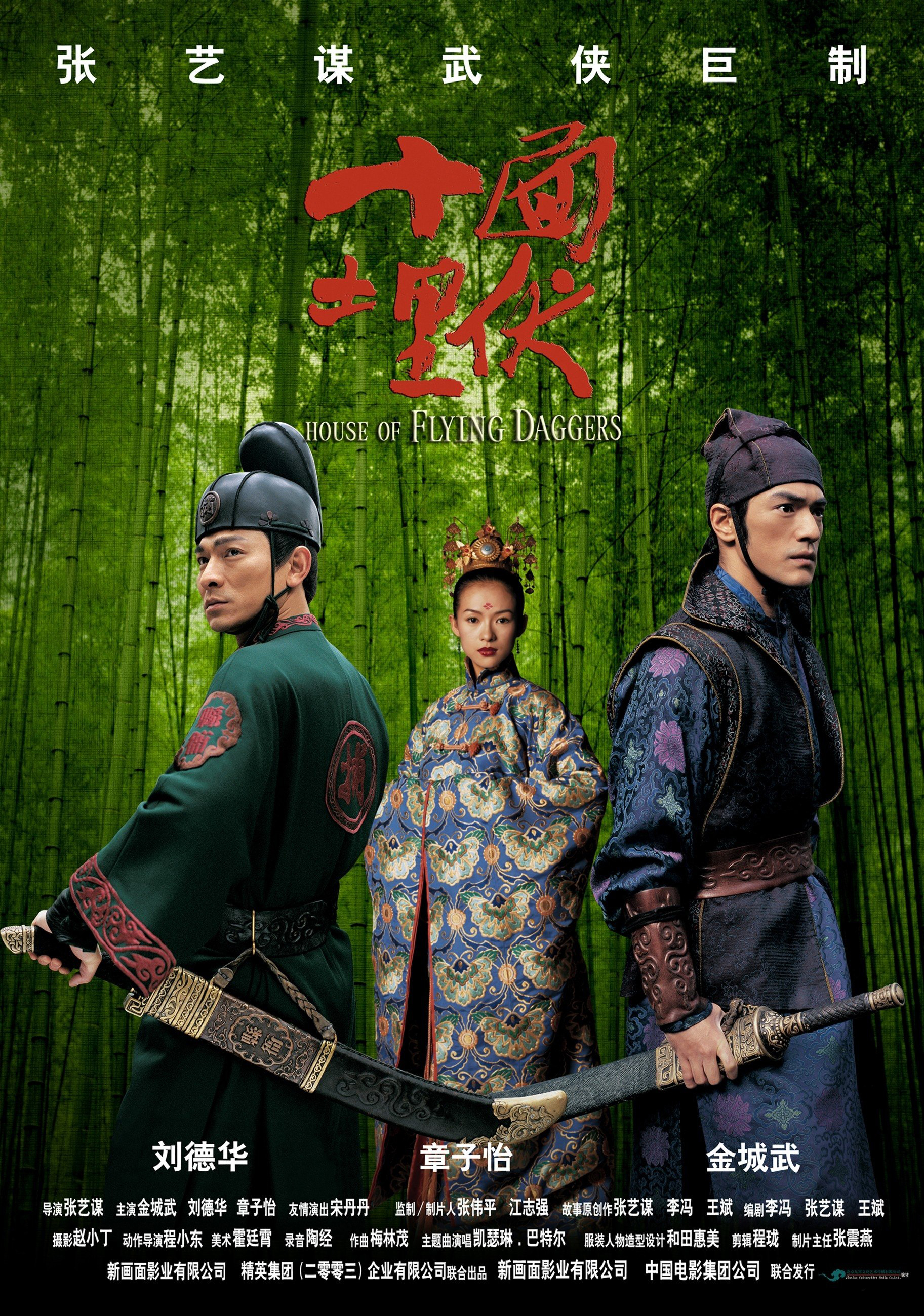
House of Flying Daggers (Film)
Introduction
House of Flying Daggers is a 2004 Chinese wuxia film co-written and directed by Zhang Yimou. The movie is renowned for its breathtaking visuals, intricate fight choreography, and the enchanting use of colors, all of which contribute to its acclaim as one of the most beautiful martial arts films ever made. The film stands out not only for its aesthetic appeal but also for its narrative depth and emotional impact, qualities that have earned it both critical and commercial success on a global scale.
Plot Summary
The film revolves around a mysterious and stealthy resistance group known as the House of Flying Daggers. The story begins with two government officers, Jin and Leo, who are tasked with capturing the leader of the House of Flying Daggers. To accomplish this, they devise a plan to rescue a blind dancer named Mei from captivity, believing she is connected to the rebel group.
As the plot unfolds, Jin and Mei embark on a perilous journey filled with deception, passion, and betrayal. Jin, initially pretending to be a lone warrior named Wind, and Mei grow close, but their relationship is complicated by their hidden agendas and the secrets they each carry. The narrative takes multiple twists and turns, culminating in an epic showdown that reveals the true loyalties and emotions of the characters involved.
Visual Style and Cinematography
The film is particularly noted for its striking use of color and visual symbolism, created by the masterful direction of Zhang Yimou. Key scenes, such as the vibrant dance sequences and the intense battles set within a bamboo forest, showcase Zhang's signature style of blending cinematic beauty with storytelling. The use of colors like red, green, and blue not only enhances the visual spectacle but also serves to convey the underlying themes and emotional currents throughout the film.
The cinematography by Zhao Xiaoding is another standout feature, earning an Academy Award nomination for Best Cinematography. The film's lush landscapes, choreographed action sequences, and intricate set designs contribute to its reputation as a visual masterpiece.
Cast and Performances
The film features a stellar cast, with Zhang Ziyi in the role of Mei, Andy Lau as Leo, and Takeshi Kaneshiro portraying Jin. Zhang Ziyi's portrayal of Mei is both captivating and nuanced, capturing the character's strength and vulnerability. Andy Lau and Takeshi Kaneshiro deliver compelling performances, adding depth to their complex characters. The chemistry between the lead actors is palpable, adding an emotional resonance to the narrative's unfolding drama.
Themes and Symbolism
House of Flying Daggers explores several themes, including love, loyalty, and sacrifice. The film delves into the complexities of human emotion and the moral ambiguities faced by the characters. The recurring motif of daggers, both as a weapon and a symbolic representation of fate and destiny, underscores the film's exploration of these themes.
The film also reflects on the conflict between personal desire and duty, as the characters struggle to reconcile their feelings with their obligations. This tension is exemplified in the love triangle between Jin, Mei, and Leo, driving much of the narrative's emotional intensity.
Critical Reception
Upon its release in 2004, House of Flying Daggers received widespread acclaim from both audiences and critics. It was praised for its artistic direction, stunning visuals, and the emotional depth of its storytelling. The film was also a commercial success, grossing over $92 million worldwide and earning several award nominations, including an Academy Award nomination for Best Cinematography and a Golden Globe nomination for Best Foreign Language Film.








